
11th Together Against Stigma Conference calls for stronger BRICS cooperation to address mental health stigma
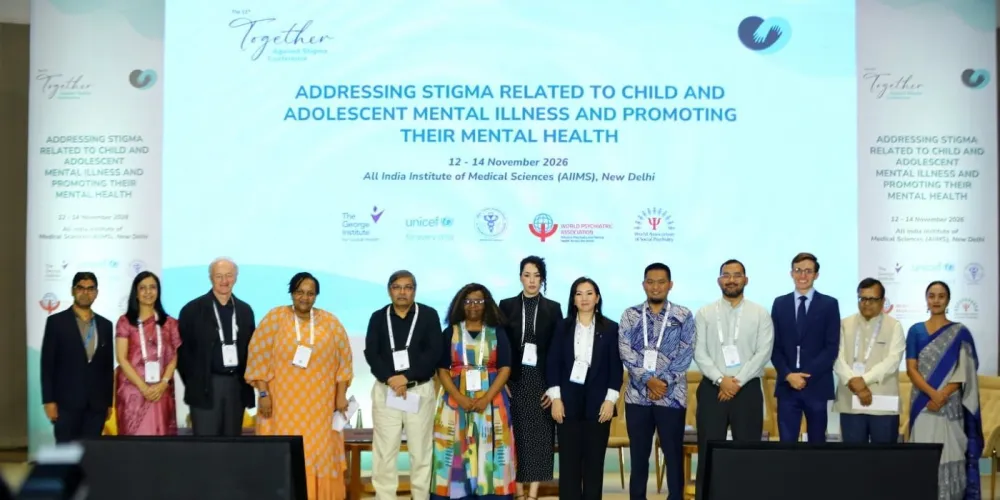
BRICS High-Level Panel highlights youth participation, school-based interventions, community mental healthcare and policy reforms as priorities for action.
The Together Against Stigma (TAS) Conference opened on 12th November at the All India Institute of Medical Sciences (AIIMS), New Delhi, marking the start of a three-day event from 12-14 November 2026. TAS conference is organised by The George Institute for Global Health, the Department of Psychiatry at AIIMS New Delhi, and UNICEF India, with support from the World Psychiatric Association (WPA) and the World Association of Social Psychiatry (WASP). The conference brings together global experts, policymakers, advocates, and individuals with lived experience to discuss practical strategies for reducing mental health stigma and improving access to care.
Day 2 of the 11th Together Against Stigma (TAS) Conference featured a BRICS High-Level Panel Discussion, highlighting the importance of strengthening collaboration among BRICS countries to address mental health stigma and discrimination. Representatives from India, Brazil, South Africa, Kazakhstan and Malaysia emphasised the meaningful participation of young people and persons with lived experience in shaping mental health policies, strengthening early identification and intervention through schools and communities, and promoting evidence-based, culturally relevant approaches. The discussion also underscored the importance of cross-country knowledge exchange, capacity building and research collaboration through initiatives such as the BRICS Training Hub Network and the BRICS Network of Centres of Excellence. NIMHANS highlighted the National Digital Academy's contribution to strengthening mental healthcare capacity, having trained nearly 50,000 healthcare professionals across India.
Our experience with anti-stigma campaigns, including through the ARTEMIS and SATHI studies, has shown that interventions tailored to different communities and contexts can make a difference. Although these studies involved very different populations, the campaigns helped improve attitudes towards people with mental health problems and reduce depression and anxiety among adolescents. This underlines the importance of developing approaches that are grounded in the realities of the communities they seek to reach.
By:Dr Y.K. Sandhya,
Program Lead – Mental Health, The George Institute for Global Health India
Stay connected and updated
Subscribe to our mailing list for the latest news, events, and updates in health research.

