
The George Institute brings together experts to strengthen adolescent mental health through ANUMATI 2.0 – an intervention in urban slums in India
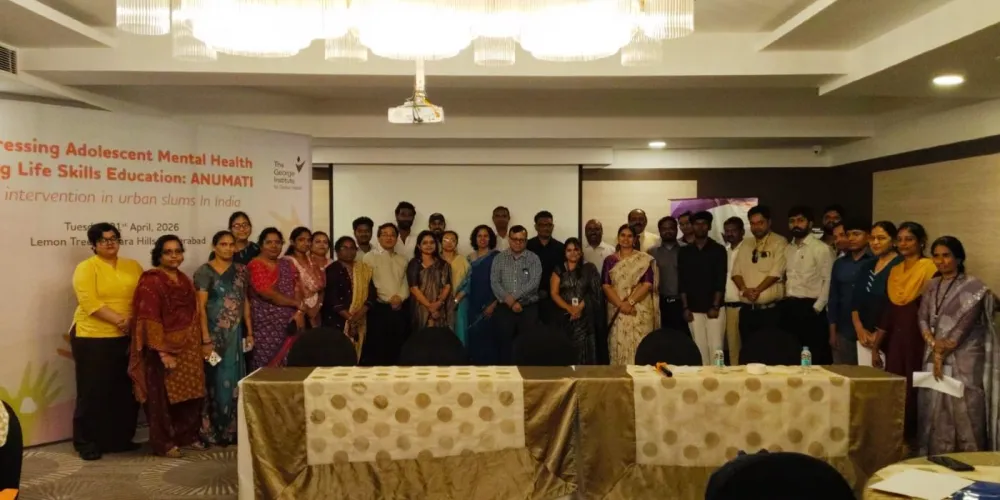
Policy symposium in Hyderabad focused on life skills education and community‑driven solutions for adolescents in urban slums in India.
The George Institute for Global Health India hosted "Addressing Adolescent Mental Health Using Life Skills Education: ANUMATI - An intervention in urban slums In India” a policy symposium in Hyderabad today (21st April 2026). The symposium brought together government representatives, non-governmental organizations and voices from the community including parents, adolescents, and school principles to discuss scalable, community‑driven approaches to strengthen adolescent mental health in urban slums in India.
The symposium focused on the role of life skills education in building resilience among adolescents living in urban slums, who face growing pressures from daily life stressors faced by adolescents, family dynamics, lack of parent and child communication and challenging socio-economic environments. It highlighted the urgent need to turn real-world situations into policies that can be put into action and expanded.
Adolescence is a period of rapid physical, psychological and social change that can be stressful. Various studies suggest rising stress among adolescents and its increasing influence on adolescent health. This stress might have an adverse impact on the psychological wellbeing of adolescents which are influenced both by inherent biological factors such as brain development, hormonal changes and behavioral factors such as coping skills and resilience.
Highlighting the importance of addressing these challenges through structured interventions like ANUMATI 2.0, Prof. Pallab Maulik, Director of Research at The George Institute for Global Health India, said,
It is critical to roll out interventions like ANUMATI 2.0 in community‑based settings, especially in urban slums, as many adolescents are missed by school‑based programmes.
School drop‑outs, adolescents who marry early, and those engaged in part‑time work face different sets of challenges, and it is important that our interventions are designed to reach and capture the needs of all these groups as wellBy:Prof. Maulik
Adolescents in Hyderabad and Delhi, especially those in low-income neighborhoods and informal settlements face multiple stressors that heighten mental health challenges. Many struggle with family pressures such as conflicts at home, high expectations from parents, and financial strain, contributing to emotional distress. Overcrowded living spaces, limited privacy, economic insecurity, and exposure to conflicts create ongoing stress that affects psychological wellbeing.
Girls, in particular, face safety concerns, restricted mobility, and risks of interpersonal violence, adding to anxiety and low self-esteem. Combined with academic pressures, these contextual challenges highlight the need to strengthen adolescents’ coping skills and resilience in the urban environment. Managing these transitions well can significantly reduce stress and long-term NCD risks, supporting better quality of life in adulthood.
Nearly 38 suicides occur every day among adolescents in India, highlighting the urgent need to prioritise adolescent mental health. Adolescents are often eager to learn how they can bring about positive change in their own lives and in their communities. Hence youth‑led initiatives that empower adolescents to influence their peers play a crucial role in bridging existing gaps. To improve adolescent health in a holistic manner, it is essential to build strong linkages across initiatives, including Yuva Clinics and other adolescent‑focused programmes like the T Hub, Hyderabad Declaration launched in the state of Telangana.
By:Dr. Salima Bhatia,
Health Specialist, UNICEF India
The symposium opened with a “Voices from the Ground” panel featuring adolescents, parents, and a school principal. Adolescents shared that their involvement in the Adolescent Expert Advisory Group as a part of ANUMATI 2.0 project enhanced their awareness and enabled them to positively influence peers and family members, helping reduce harmful ideations related to suicide and addiction. They emphasised the importance of sharing concerns with trusted individuals to ease distress. Parents highlighted the need to better understand adolescents, recognise their physical and emotional transitions, and build trust through open communication. School leadership stressed the importance of parent–teacher collaboration, early identification of adolescents needing support, and addressing mental health concerns across all school settings, beyond urban slums.
The symposium also featured an expert panel discussion that included Dr. Raghuveer Raju, Assistant Professor, Department of Psychiatry, Government Mental Health Centre, Institute of Mental Health; Dr. Prudhvi, State Programme Officer (Mental Health), National Health Mission, Government of Telangana; Dr. P. Jawaharlal Nehru, Psychologist, Tele-MANAS programme, National Health Mission, Government of Telangana; and Dr. Vaman Kulkarni, Associate Professor, Department of Community and Family Medicine, AIIMS Bibinagar, Telangana. The expert panel highlighted the multiple stressors commonly observed in routine adolescent care, including parental and societal expectations, excessive and inappropriate use of social media, academic pressure, complex family dynamics, and substance use. Despite these challenges, adolescents often do not receive adequate support from their families, with stigma remaining a significant barrier to seeking help. The panel noted that the dearth of mental health professionals in India makes it imperative to involve multiple stakeholders in supporting adolescents.
Parental awareness was emphasised as vital in shaping an individual’s personality and well‑being. The panel called on health professionals, community members, research organisations, and child welfare organisations to work collectively to build a strong and responsive support network for adolescents, while stressing that mental health must be integrated into overall health and normalised as a fundamental aspect of adolescent well‑being. The efforts of the Govt of Telangana to train RBSK teams and health staff in adolescent mental health issues and taking steps to integrate adolescent mental health through the public health system and school systems was also discussed. The role of preventing mental disorders as early as possible even before exposure to risk factors occur was also mentioned. Leveraging social media effectively to deliver life skills education and other similar health messages was also highlighted.
Strengthening parental education was also identified as being critical, as adolescents may not always listen to their parents, but they tend to imitate their actions.
The ANUMATI initiative aims to demonstrate how structured life skills education interventions delivered both through in-person and social media platforms could empower adolescents with the tools to navigate stress, build resilience, and improve long-term health outcomes and in the process overcome depression and have a better quality of life.
Stay connected and updated
Subscribe to our mailing list for the latest news, events, and updates in health research.


