
IMPACT: Innovations using Mhealth for People with dementiA and Co-morbidiTies
Project Status
ActiveStart Date
Project location
Background
Dementia is a growing global public health challenge, affecting more than 50 million people worldwide, with around 60% living in low- and middle-income countries (LMICs), where health systems often have limited capacity to provide diagnosis, treatment and long-term support. Latin America is projected to experience one of the greatest increases in dementia incidence globally, and Peru alone is expected to see the number of people living with dementia rise from approximately 147,000 in 2010 to almost 750,000 by 2050. Dementia is closely linked with multimorbidity, with people living with dementia experiencing around twice as many physical and mental health conditions as those without dementia. These co-existing conditions are frequently underdiagnosed and poorly managed, leading to reduced quality of life for both people with dementia and their carers, alongside substantial economic and societal costs.
Peru's fragmented health system faces significant challenges in responding to the growing burden of dementia. Public awareness remains low, diagnosis is limited, specialist services are scarce, and most care is provided informally by family members, predominantly women, with little support. Despite recent policy commitments, there remains an urgent need for scalable, community-based approaches to improve dementia diagnosis, care and health system readiness. Advances in digital health infrastructure and the expansion of community health worker programmes provide an important opportunity to develop and evaluate innovative, technology-enabled models of care that can strengthen dementia services in Peru and across Latin America while generating lessons for other LMICs facing similar challenges.
Aim
The aim of our project IMPACT Salud is to strengthen health systems in Peru using dementia as a tracer condition through sustainable, integrated, community-delivered, technology-enabled innovations.
Research Methodology
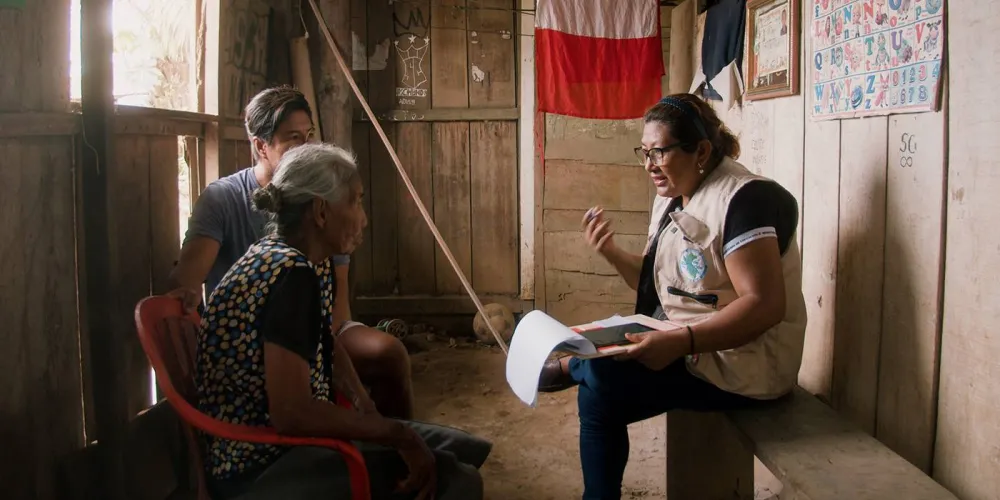
The project uses a mixed-methods, interdisciplinary approach to strengthen health systems for dementia care in Peru. Across five interconnected work packages, it evaluates health system readiness, develops and tests an mHealth-enabled dementia screening tool for community health workers, adapts and assesses a community-based intervention for people living with dementia and their carers, and estimates the economic burden of dementia and the costs of scaling these innovations. Research is co-designed with people living with dementia, carers, healthcare providers and policymakers to ensure interventions are feasible, acceptable and relevant to the local context.
Research takes place across four diverse regions of Peru—Lima, the coast, the Andes and the Amazon—to capture variation in health systems and populations and support the development of scalable approaches with relevance across Latin America.
Current Status
The project has successfully completed major phases of data collection across four regions of Peru, enrolling 3,600 participants and generating new evidence on health system readiness for dementia care. The IMPACT Salud mHealth screening application has been developed and is entering evaluation, while the caregiver intervention has progressed into feasibility testing. Project findings are already informing policy through contributions to Peru's National Dementia Plan and national guidance on dementia diagnosis and caregiver support. The project's health system assessment methodology is also being expanded to Colombia, Argentina and Brazil, extending its regional impact. The final phases will focus on analysing findings, evaluating the digital tools and intervention, disseminating results, and supporting the translation of evidence into policy and practice.
