
The Hon Rebecca White MP delivers insight on building a more equitable future at Women Deliver side event

In an intimate gathering in Melbourne hosted by The George Institute for Global Health, Assistant Minister for Health and Aged Care, Rebecca White has spoken candidly about the urgent need to redesign health systems so they work better for women, and the work she is leading to drive forward this change.
Held alongside Women Deliver 2026 ‘Beyond the Male Default: The Future of Women’s Health’ featured Keziah Bennett-Brook, Program Director, Guunu-maana (Heal) Aboriginal and Torres Strait Islander Health Program in conversation with the Hon Rebecca White MP, Assistant Minister for Health and Aged Care, Assistant Minister for Indigenous Health and Assistant Minister for Women.
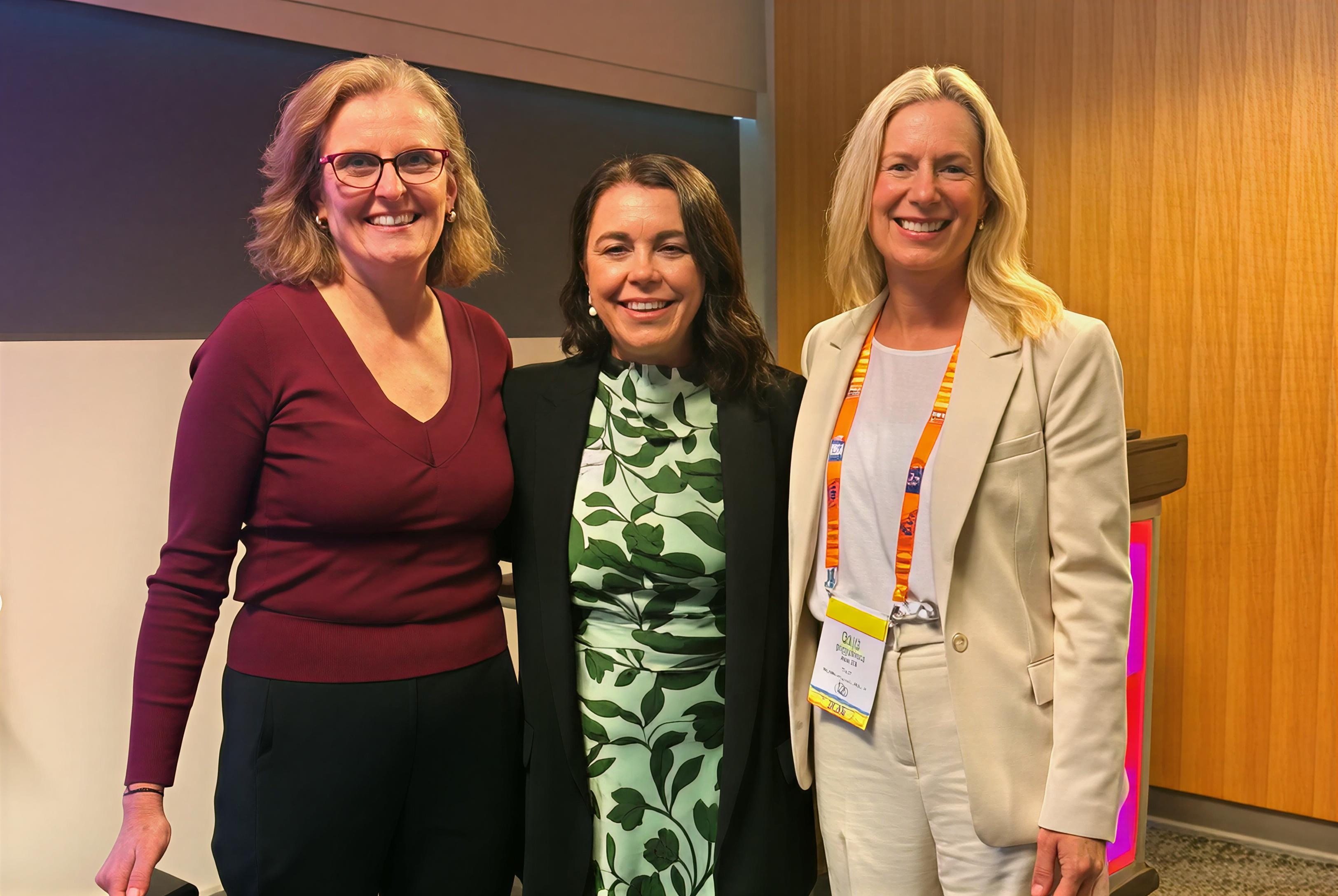
Held alongside Women Deliver 2026 ‘Beyond the Male Default: The Future of Women’s Health’ featured Keziah Bennett-Brook, Program Director, Guunu-maana (Heal) Aboriginal and Torres Strait Islander Health Program in conversation with the Hon Rebecca White MP, Assistant Minister for Health and Aged Care, Assistant Minister for Indigenous Health and Assistant Minister for Women.
The event was opened by Padma Raman PSM, Executive Director of the Office for Women in The Department of the Prime Minister and Cabinet, who outlined why centring women’s health and gender equality efforts are essential to creating stronger, fairer and more resilient societies. Having recently returned from The Commission on the Status of Women in New York, she urged the audience to appreciate how far we have come towards reaching gender equality in Australia, but warned to be vigilant about how quickly rights can be lost.
The event discussion examined the long-standing legacy of the male default in medicine, the impact on women’s health outcomes, and the reforms now underway in Australia led by the Australian Government.
Reflecting on how lived experience and community connection shapes her work, A/Minister White noted that every conversation with constituents reminds her of her “responsibility to them,” adding that these discussions are often “deeply personal” and motivate her to improve outcomes for women across Australia.
A major focus of the discussion was the A/Minister’s decision to prioritise cardiovascular disease as the first area of work for the new Ministerial Expert Panel on Women’s Health that will report directly to her. White highlighted that cardiovascular disease remains one of the leading causes of death for Australian women yet is still poorly recognised and under‑diagnosed. “We don’t really have conversations as women about this… and we don’t explain to one another what symptoms to look out for,” she said.
She emphasised the evidence gaps driving this work, pointing to delays in diagnosis and treatment: “Women presenting to the emergency department with a heart attack are treated 20 minutes later than a man would be.” The expert panel will deliver recommendations to the A/Minister later this year, with priorities potentially including public awareness, clinician education, and targeted research investment.
Audience questions prompted broader reflections on gender bias, intersectionality, and the social determinants of health. A/Minister White stressed the importance of co‑design and community voice, explaining that policy must be shaped “with community voices at the decision‑making table” rather than involving them after the fact. She also spoke to the need for cross‑sector collaboration, noting that issues like housing, transport, and cultural safety are inseparable from health outcomes.
A/Minister White also shared stories from her travels to women’s health and pelvic pain clinics across the country, describing the transformative impact of simply being heard. She recounted women who had seen “six or seven different professionals” before finally having their pain taken seriously, calling these moments a reminder of why system reform is essential.
The event closed with a call to maintain momentum. As A/Minister White put it, while health systems “haven’t been designed with women in mind,” there is now a real opportunity, and responsibility, io build a more equitable future.
Stay connected and updated
Subscribe to our mailing list for the latest news, events, and updates in health research.
