
Potassium-enriched low‑sodium salt substitutes: from consensus to clinical and public health action in India
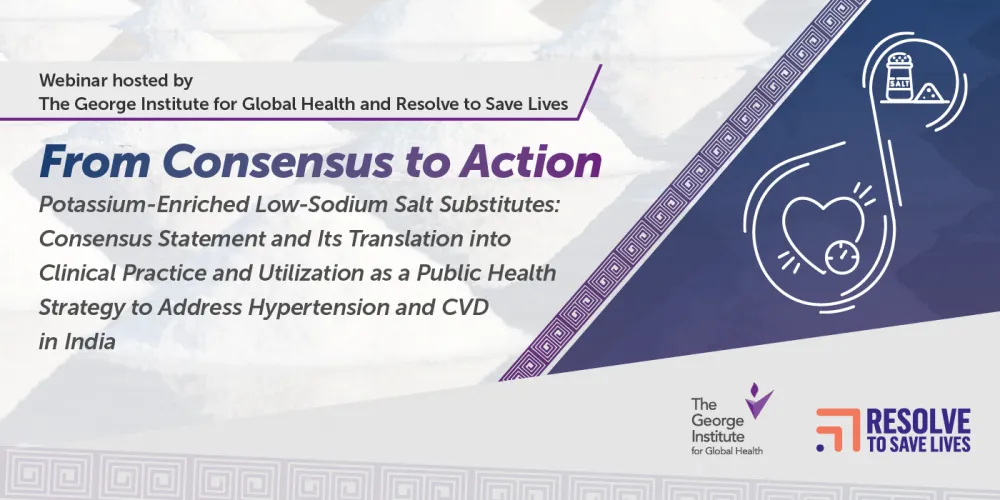
The George Institute for Global Health, India in collaboration with Resolve to Save Lives, had conducted a consensus conference titled “Bridging evidence and practice: a consensus conference on the use of low‑sodium salt substitutes (LSSS) as a public health intervention” on 02 December 2025 in New Delhi. To inform this consensus conference, our team had undertaken an extensive evidence synthesis exercise to assess existing gaps and explore how LSSS can be positioned within India's salt-reduction strategies for CVD and hypertension prevention and management in the context of the WHO guidelines. The findings were collated into a White Paper, which was presented during the event for discussions and feedback.
The consultation brought together a group of leading experts, including clinicians, nutritionists, public health specialists, and representatives from government, non-governmental, and multilateral organisations to share perspectives and deliberate on critical themes such as current salt reduction strategies and the safety & efficacy of LSSS and its use in India which led to the development of a consensus statement.
As a next step, we are organising a dissemination webinar titled "From consensus to action: potassium‑enriched low‑sodium salt substitutes consensus statement and its translation into clinical practice and utilisation as a public health strategy to address hypertension and CVD in India". Its objectives are to share the consensus statement with a wider audience, highlight how these recommendations can be translated into clinical practice, and explore their potential for integration into public health strategies aimed at reducing hypertension and cardiovascular disease in India.
Date: Friday, 17 April
Time: 3:00-5:00 PM IST
Format: Online (Zoom)
Agenda: Click here
Expected outcome
The webinar will result in the formal dissemination of the consensus statement on potassium-enriched low-sodium salt substitutes, which will foster dialogue on practical pathways for translating the statement into clinical practice and integrating it into India’s broader public health strategies to address hypertension and cardiovascular disease. By engaging government, non-governmental, and multilateral stakeholders, the event will strengthen collaboration and build momentum toward policy alignment, regulatory support, and community-level interventions.
Speakers
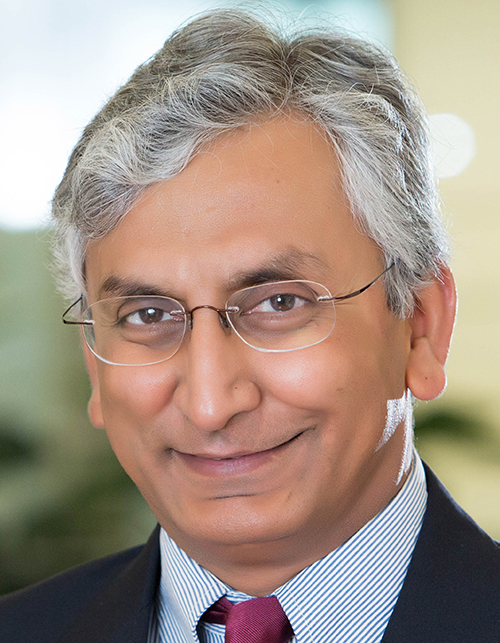
Prof Vivekanand Jha
Executive Director, The George Institute for Global Health, India
Professor Jha is Executive Director at The George Institute for Global Health, India, Chair of Global Kidney Health, Faculty of Medicine, Imperial College London, and the past President of the International Society of Nephrology. He has wide-ranging research interests, including understanding the health and societal impact of kidney diseases around the world and the development of affordable, scalable and sustainable primary and secondary prevention tools. He has worked with many organisations including the WHO to develop clinical practice guidelines and advocacy papers, has lectured extensively around the world, and is a prolific writer and editor.
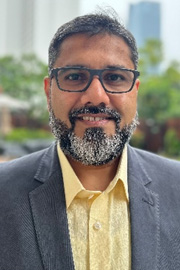
Dr. Syed Imran Farooq
Executive Director, Resolve to Save Lives, India
Dr. Syed Imran Farooq is a seasoned public health leader with over 22 years of experience designing and implementing impactful health programs across India, Southeast Asia, and beyond. He currently serves as Executive Director – India at Resolve to Save Lives, where he leads national initiatives on hypertension control, salt reduction, and trans fat elimination, while supporting the Government of India’s Ayushman Bharat Mission to strengthen primary healthcare systems.
Previously, he was Chief of Party for the USAID Tuberculosis Private Sector (TBPS) Activity in Indonesia with FHI 360, where he led strategic engagement with private sector, expanded access to advanced TB diagnostics and treatment, and championed digital interoperability to improve people-centered care.
Dr. Imran brings deep expertise in TB control and elimination, polio eradication, strategic health purchasing, and public-private partnerships. He has successfully managed complex, multi-million-dollar health programs supported by USAID, the Global Fund, and the Gates Foundation, with a focus on scaling sustainable solutions and enhancing public sector stewardship.
Now based in India after five years abroad, he is actively collaborating with national and state partners to advance equitable, evidence-based public health interventions to combat the rising burden of NCDs—ensuring that critical learnings from past programs inform present and future health priorities.
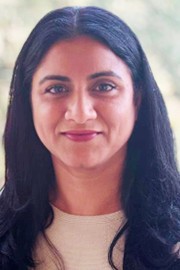
Dr Manika Sharma
Principal Advisor, Food Policy Resolve to Save Lives India
Dr Manika Sharma is the Principal Advisor – Food Policy at Resolve to Save Lives (RTSL), India, where she leads RTSL India’s initiatives on promotion of healthier diets to prevent diet-related non-communicable diseases. With over 15 years of experience in public health and nutrition, she specialises in advancing evidence-informed health and nutrition policies and scaling data-driven programmes across India and South Asia.
Dr. Sharma's expertise includes diet quality and diversity; micronutrient supplementation; impact evaluation of nutrition programmes; food policy; diet-related NCDs; and agriculture–nutrition linkages. She works with national and state governments, as well as multi-sectoral partners, to translate research and evidence into sustainable policy and practice. She is a Fellow of WomenLift Health (2025 India Cohort), has co-authored several peer-reviewed publications, and holds a Master's in Health Administration from the Tata Institute of Social Sciences.
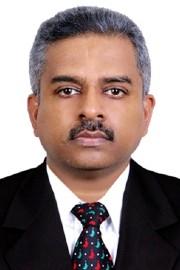
Dr Sailesh Mohan
Deputy Director, Centre for Chronic Disease Control, New Delhi
Dr Sailesh Mohan is Deputy Director, Head Cardiovascular Epidemiology and Secretary Governing Board, Centre for Chronic Disease Control. He is involved in chronic non-communicable disease (NCD) research, teaching and training. He leads various NCD research projects and current work is focused on: (a) developing, implementing, and evaluating sustainable comprehensive community and health system-based approaches to hypertension and diabetes and multimorbidity prevention and control (b) building the evidence base to support transformation to high quality health systems by improving measurement, testing solutions, and creating generalizable knowledge in partnership with researchers and changemakers in low- and middle-income countries (LMICs) (c) cohort studies (Precision-CARRS, UDAY) to advance understanding of cardiometabolic and neurodegenerative diseases.
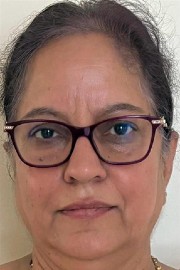
Dr Meenakshi Sharma
Ex Scientist- G, Cardiovascular Diseases, Stroke and Other neurological Disorders, Division of Non-Communicable Diseases (NCD), Indian Council of Medical Research Hqrs., New Delhi
Dr Meenakshi is a distinguished scientist with over three decades of experience in public health research, specializing in cardiovascular diseases, stroke, and neurological disorders. She earned her MSc and PhD in Biochemistry from Panjab University and PGIMER, Chandigarh, respectively. Dr. Sharma served at the National Institute of Communicable Diseases before joining the Indian Council of Medical Research (ICMR). Her work has been pivotal in establishing stroke and STEMI care pathways, and leading clinical trials such as INSTRUCT. With more than 80 publications in leading journals, she has contributed significantly to global and national studies on disease burden, dementia diagnostics, and hypertension control. She has also played a key role in biobank development and neurocognitive tool standardization.
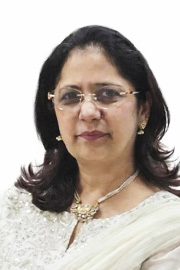
Dr Sachdev Meenakshi
Dietician, Tamil Nadu Govt Multi Super Specialty Hospital Chennai
Dr Sachdev Meenakshi brings over thirty years of expertise in Clinical and Therapeutic Nutrition. She is currently serving as a Dietician at the Tamil Nadu Government Multi Super Specialty Hospital, Chennai, and is also a faculty member in Clinical Nutrition at Madras Medical College, Chennai. She has held prominent leadership roles, including Chapter Convener of Network of Professionals in Food and Nutrition, Chennai, National Executive Committee (NEC) Member of the Indian Dietetic Association, and Treasurer of the Association of Diabetic Educators (India). Her career has been honored with several prestigious awards, including the FITUP FEST Award, SADHANA AWARD, NECTAR Award, and the Rotary Club Chennai Carnatic Award. She has also received the Meritorious Service Award at TNGMSSH. She is the Author of "TWO LIVES - TWICE AS PRECIOUS: Medical Nutrition Therapy for Hyperglycemia in Pregnancy" and "DIET METRICS: Handbook of Food Exchanges", further contributing to the field through her published works.
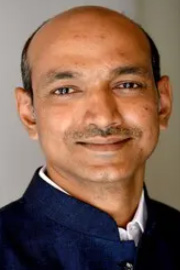
Prof Ambuj Roy
Professor, Department of Cardiology, AIIMS, New Delhi
Ambuj Roy is a Professor of Cardiology and Head, Skill, e-Learning and Telemedicine Facility, at the All-India Institute of Medical Sciences (AIIMS), New Delhi. Prof Roy is a fellow of the American College of Cardiology, National Academy of Medical Sciences, National Academy of Science, India and Royal College of Physicians.
He is a clinician-researcher with extensive experience in managing cardiovascular disease patients in low-resource settings at India's premier medical institute. His research focuses on cardiovascular epidemiology, preventive cardiology, and translational research aimed at mitigating the rising burden of cardiovascular risk factors in low-income countries. He has ongoing studies on developing and evaluating an anti-inflammatory Indian diet, role of vaccine in heart attack patients, role of digital health in reducing high blood pressure and diabetes burden in India. He has over 300 publications, nearly 70,000 citations, and an h-Index of 55. He features in Stanford University's list of the World's Top 2% Scientists every year since 2022.
He is member of the governing council of AIIMS, Rishikesh and also serves on several advisory committees of the Ministry of Health and Family Welfare, Government of India, and the Task Force Committee of the Indian Council of Medical Research for Cardiovascular Research in India.
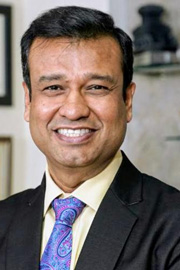
Dr Sandeep Mahajan
Professor, Department of Nephrology, All India Institute of Medical Sciences, New Delhi
ISN Education Ambassador, ISPD Fellow
Secretary PDSI, Deputy Chair International Society of Nephrology South East Asian Board