
Evidence2Policy 2025: Bridging research and policy to achieve progress on NCDs, gender equity, and UHC
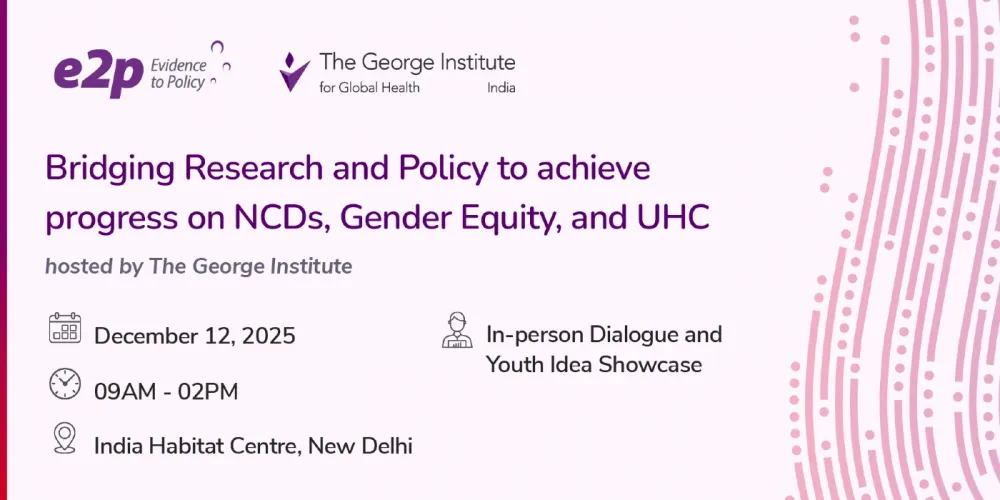
The George Institute for Global Health, India, is organising its eighth Evidence2Policy (E2P) discussion on the topic “Bridging research and policy to achieve progress on NCDs, gender equity, and UHC.”
Non-communicable diseases (NCDs) account for more than 65% of deaths in India posing an urgent and growing challenge to public health and economic development. Tackling this crisis demands more than medical innovation; it calls for evidence-informed policymaking, equitable service delivery, and inclusive community engagement. Achieving Universal Health Coverage (UHC) is a critical enabler in this effort, offering a framework to ensure that all individuals, regardless of gender or socioeconomic status, can access the care they need without financial hardship.
India is navigating a complex health landscape where non-communicable diseases (NCDs), gender inequity in health access, and the vision for Universal Health Coverage (UHC) intersect. The George Institute for Global Health has been at the forefront of generating high-quality, policy-relevant research. The E2P discussion convenes government leadership, researchers, funders, and partners to explore how evidence can be better aligned with evolving policy priorities.
Mark your calendars for 12th December 2025 | Friday | 9:00 AM IST
We invite you to register for this event using the link below.
The dialogue will also feature a Youth Idea Showcase, where young researchers from The George Institute will participate in photo exhibition and make creative policy pitches related to the theme—illustrating how next-generation researchers can shape the future of evidence-based policy.
Objectives
- Identify current evidence gaps, best practices and support policy priorities within India’s NCD agenda.
- Foster dialogue among policymakers, researchers, partners, and funders to promote the use of evidence in shaping policies on non-communicable diseases (NCDs) and gender equity, while advancing Universal Health Coverage (UHC) and strengthening health systems for equitable and sustainable health outcomes.
- Strengthen partnerships to translate evidence into sustainable, scalable interventions.
- Showcase youth ideas and perspectives from The Institute as part of a new generation of evidence-informed changemakers.
The full agenda and session details have been updated.